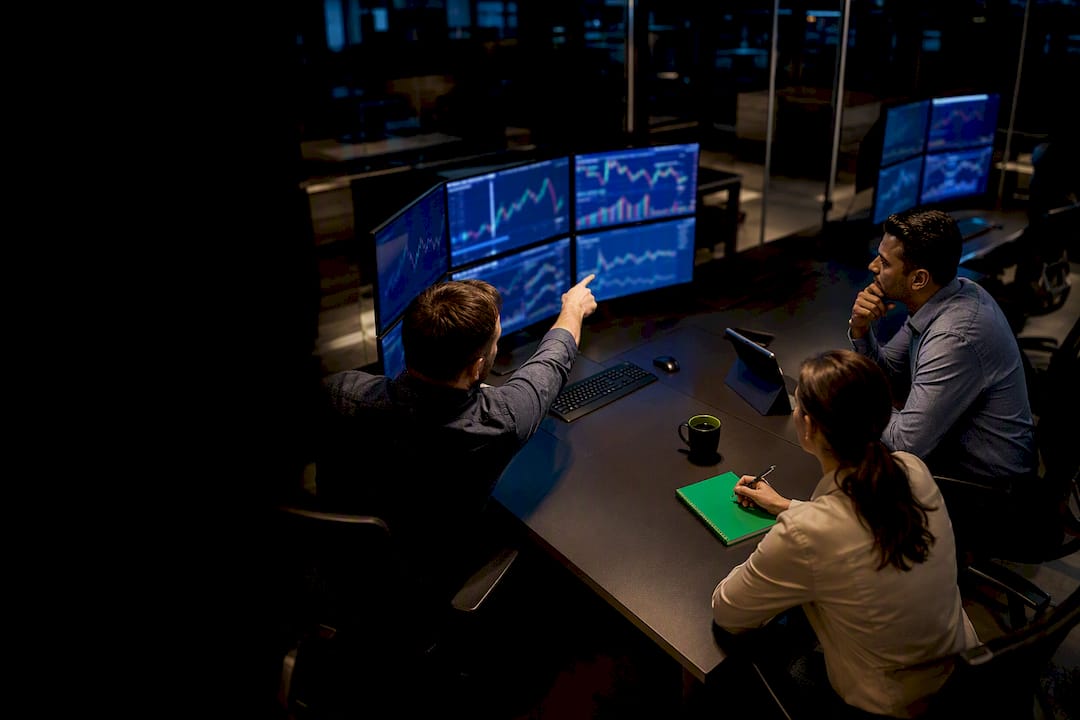
Trading culture is the shared set of values, unwritten rules, and incentives that shape how traders act when no one’s grading their trade log. It determines whether a losing streak gets reported honestly or buried, whether risk limits get respected or bent, and whether a junior trader speaks up or stays quiet. That, in turn, shapes P&L, compliance exposure, and how fast a desk actually learns from its mistakes.
TL;DR:
- Incentive structures that reward P&L without risk limits encourage excessive risk-taking and undermine sound trading culture.
- Observable signals such as honest post-trade reviews and a safe incident-reporting routine are crucial indicators of a healthy trading culture.
- Weak psychological safety leads to unreported near-misses and delayed mistake correction, increasing operational and compliance risks.
- Aligning incentives, enforcing structured reviews, and fostering psychological safety are the top priorities for meaningful culture improvement.
- Trading desks with strong mentorship programs and documented feedback processes see faster improvement and better risk management outcomes.
Table of Contents
- What Does Trading Culture Mean in Practice?
- Why Trading Culture Affects Performance and Governance
- The Main Types of Trading Culture (and Their Tradeoffs)
- Applying Safety-Culture Thinking to Trading Risk
- How to Build or Fix a Trading Desk’s Culture
- Signals That Tell You Culture Is Working (or Isn’t)
- What 18 Years on Live Desks Taught Me About Culture
- What Leaders Should Fix First
- Build a Better Trading Culture With Structured Mentorship
- Sources
What Does Trading Culture Mean in Practice?
Culture is not a poster in the break room. It is the collective mindset and invisible web of unwritten rules that governs behavior when nobody’s watching, and on a trading desk, it plays out in very specific, observable ways.
Think of it in four layers:
- Values: what the desk actually rewards. Does it praise disciplined risk management or does it quietly celebrate the trader who “sent it” and got lucky?
- Norms: the informal rules everyone follows. Do traders size up after a loss, or is revenge trading called out immediately?
- Artifacts: the visible evidence. Trade journals, morning briefings, post-mortem docs, even the Slack channel tone.
- Rituals: recurring behaviors like end-of-day debriefs or weekly loss reviews that reinforce whatever the desk actually values, not just what it claims to.
Firms with strong trading culture definition tend to make these layers explicit. IMC’s own culture page describes early responsibility and a flat structure as deliberate design choices, not accidents. That’s the difference between individual habit and firm-level system: one trader journaling on their own is a personal routine. A firm mandating structured reviews for every desk is culture engineered on purpose.
Why Trading Culture Affects Performance and Governance
Culture affects how fast information travels, how much risk gets taken, and whether errors surface before they compound. A desk where junior traders fear looking wrong will hide small mistakes, and small mistakes left unaddressed tend to grow into large ones.
Compensation is the single biggest lever. Commodity trading firms are frequently built around performance-based incentives, and Spencer Stuart’s research on the commodity sector frames compensation structure as a central driver of trader behavior, not a side detail. If a bonus scheme rewards raw P&L with no penalty for excessive risk, you will get excessive risk. That’s not cynicism. It’s incentive design doing exactly what it was built to do.
Culture, in numbers: the connection between incentive structure and misconduct risk shows up consistently enough in industry analysis that regulators now treat compensation review as a standard part of culture assessment, not an afterthought.
Hiring and retention follow the same logic. Traders who join a firm expecting mentorship and structured learning, then find a hierarchical, blame-first environment, tend to leave fast, and the ones who stay often adapt to survive rather than to perform.
The Main Types of Trading Culture (and Their Tradeoffs)
Most desks fall into one of four broad patterns, and none of them is universally right. Fit depends on the business model, the product, and the risk tolerance the firm can actually afford.
- Market/performance-driven: rewards raw results fast. Strong for high-frequency or prop environments, but prone to short-termism and hidden risk-taking when incentives outrun controls.
- Clan/mentorship-based: built around senior traders coaching juniors. Produces loyalty and knowledge transfer, but can slow decision-making if hierarchy blocks dissent.
- Process-oriented: prioritizes documented workflows and repeatable checklists over individual heroics. Easier to measure and coach, though it can feel bureaucratic on fast-moving desks.
- Hierarchical/command: centralizes decisions with senior leadership. Good for consistency and control, weaker at surfacing bad news quickly.
A macro fund and a commodity trading house won’t need identical cultures. What matters is whether the type in place matches the risk the firm is actually taking, and whether anyone at the top is confirming that fit deliberately rather than by default.
Applying Safety-Culture Thinking to Trading Risk
Safety-culture theory, built originally for high-risk industries like aviation and energy, maps surprisingly well onto trading desks. The framework breaks culture into measurable dimensions: management commitment, systems and procedures, incident reporting, and collaboration. Weakness in any one of those dimensions has been linked in academic analysis to risky or unethical trading behavior.
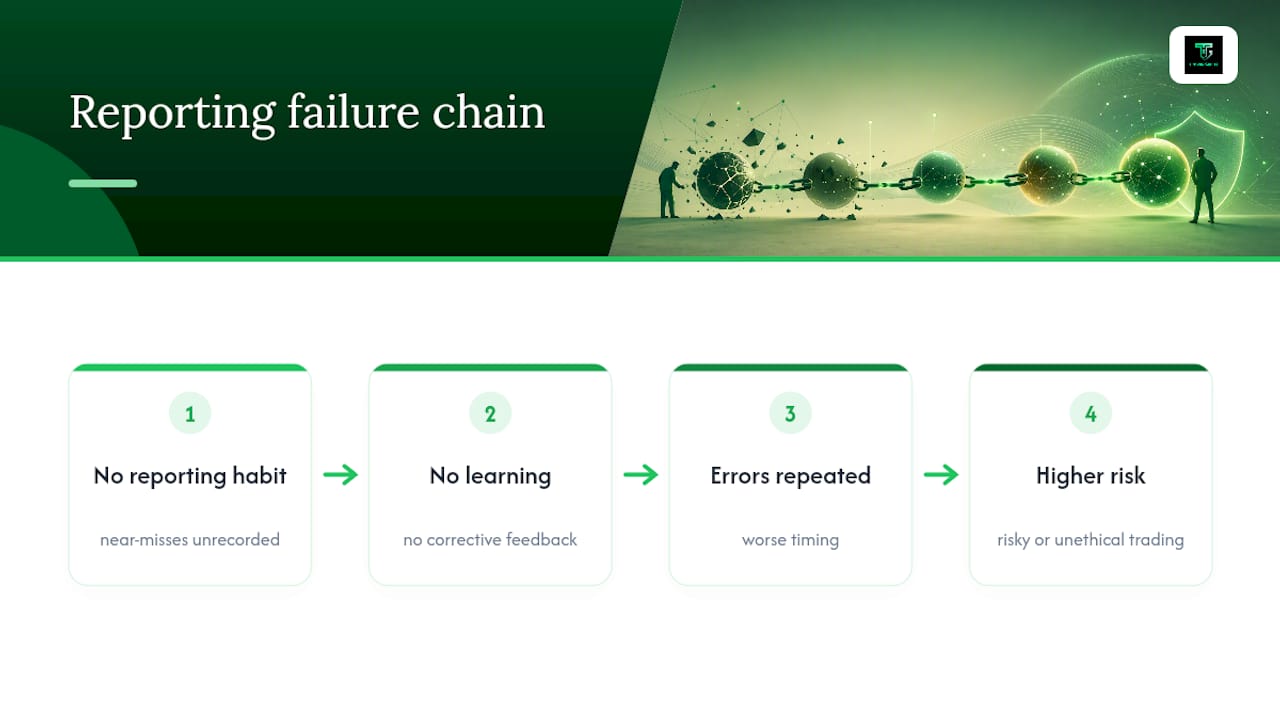
When a desk lacks a genuine incident-reporting habit, near-misses go unrecorded. Nobody learns from the trade that almost blew through a stop-loss because nobody wrote it down. The next trader repeats it, usually with worse timing.
Regulators have picked up on this too. The FCA’s guidance on psychological safety makes the point directly: traders need to feel safe reporting problems without fear of retribution, or the firm loses its early-warning system entirely. That’s not a soft HR concern. It’s operational resilience.
The practical implication is straightforward: controls only work if the culture around them supports honest reporting. A rulebook nobody trusts enough to use honestly is decoration, not risk management.
How to Build or Fix a Trading Desk’s Culture
Culture change fails most often because teams tackle rituals before they tackle incentives. Fix the reward structure first, or the new rituals just become theater.
- Align incentives with stated values. If you claim to value risk discipline, make sure comp actually penalizes limit breaches, not just rewards big wins.
- Institute structured post-trade reviews. Weekly, not occasional. Review the process behind the trade, not just the outcome.
- Build real mentorship pairing. Junior and senior traders paired deliberately, not left to informal chance. Community-driven peer support accelerates this significantly.
- Create a psychological-safety routine. A standing “what went wrong this week” segment where no one gets punished for raising it.
- Set up simple incident reporting. Even a shared log for near-misses and rule bends, reviewed monthly.
- Rotate roles periodically. Prevents blind spots that form when one person owns a process too long.
Small teams can run this whole sequence informally in a few weeks. Larger firms need it written into policy, with someone accountable for tracking whether it’s actually happening, not just approved on paper.
Pro Tip: Start incident reporting before you start mentorship. If traders don’t trust that reporting a mistake is safe, mentorship conversations will stay surface-level and nothing real gets fixed.
Practitioner resources on process-oriented trading back this sequencing: documented workflows convert vague cultural claims into behaviors you can actually coach and measure.
Signals That Tell You Culture Is Working (or Isn’t)
You don’t need a consultant to diagnose culture. You need to watch the right signals for 30 to 90 days.
Leading indicators:
- Quality and frequency of post-trade reviews (are they honest or performative?)
- Tone of incident reports (do people report small errors, or only catastrophic ones?)
- Informal survey signals on whether traders feel safe flagging problems
Lagging indicators:
- Turnover rate, especially among traders in their first two years
- Regulatory findings or near-miss escalations
- Unexplained P&L variance that nobody can trace to a documented decision
Firms with weak reporting culture typically show a pattern: incidents get discovered late, often by compliance rather than by the trader involved, which is the clearest lagging signal that psychological safety is missing.
Run a 90-day window: track review quality weekly, incident reports monthly, and turnover against the prior quarter. If review quality is improving but turnover isn’t moving, you’re probably fixing rituals without fixing incentives.
What 18 Years on Live Desks Taught Me About Culture
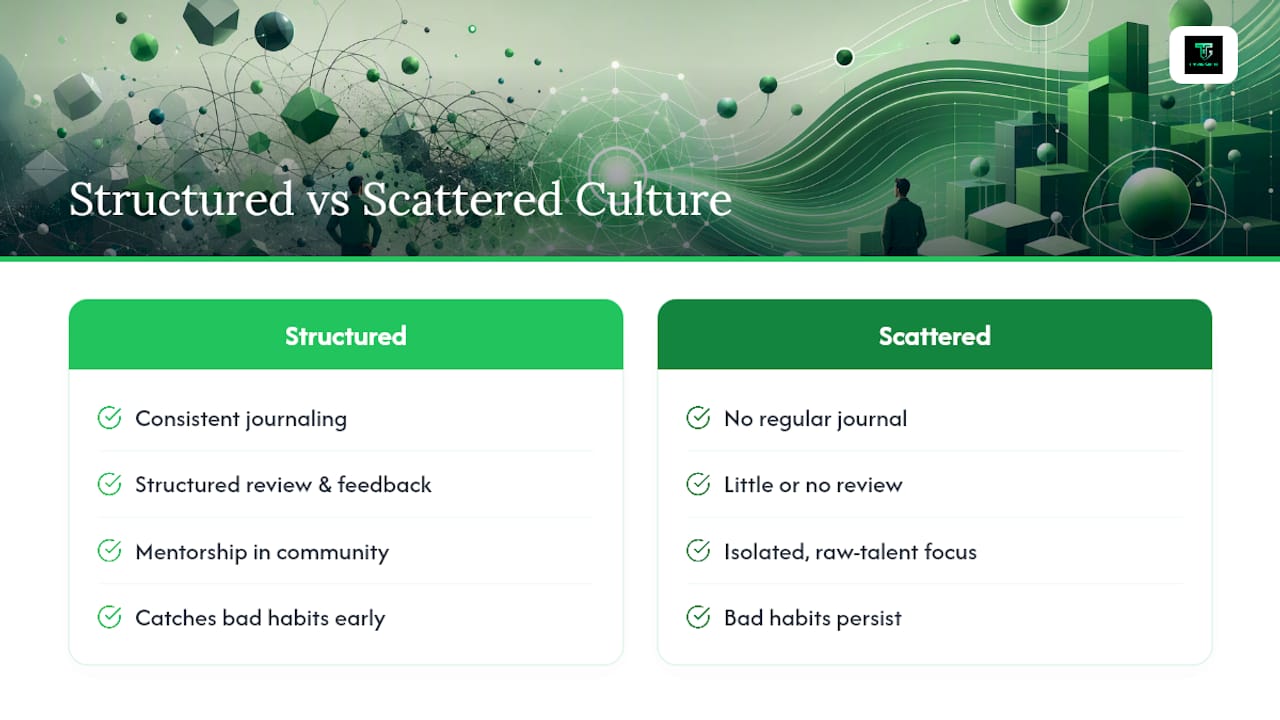
Trader Gibkey has spent more than 18 years trading live markets, not backtesting theory, and the pattern repeats constantly: traders who journal consistently and get structured feedback improve faster than traders relying on raw talent alone. Mentorship inside a real community changes outcomes because it catches bad habits early, before they cost real money.
Former students who moved from scattered, emotional trading to a documented, reviewed process describe the shift as the difference between guessing and operating with a plan. That’s not a personality trait. It’s a trading psychology shift that structured review and honest community feedback make possible.
What Leaders Should Fix First
Three priorities matter more than everything else: align incentives with the risk behavior you actually want, install honest post-trade reviews, and protect psychological safety so bad news travels fast.
Skip the culture posters and values workshops if compensation still rewards the wrong behavior. Rituals without incentive alignment change nothing. Look at your own desk this week and ask which of the three you’re actually missing.
— Gabriel
Build a Better Trading Culture With Structured Mentorship
Culture doesn’t fix itself, and reading about incentives and psychological safety only goes so far without a structured way to practice them. Mentorship programs often provide traders with support such as live sessions and journaling frameworks to build review habits and discipline, instead of having to develop these skills alone from scattered forum advice.
Structured courses may cover price action strategies and risk management, while private communities can offer peer accountability. Traders early in their journey can access guided learning, and experienced traders may receive mentorship and market analysis to compare against their own assessments. If you’re ready to trade with a process instead of instinct, start with Tradergibkey and see which mentorship path fits your stage.
Sources
For deeper context beyond this primer: the FCA’s psychological safety guidance covers regulatory expectations directly. Spencer Stuart’s commodity-sector report details incentive-driven culture patterns. The Hive Network’s think-tank insights offer head-trader perspectives on mentorship and inclusive leadership.
- Workplace culture
- Safety culture in financial trading (academic paper)
- Culture and strategy in the commodity sector