
“Forex tax portugalia” is treated here as shorthand for one thing: finding structured, price-action based mentorship that actually improves live-trading results. If that’s what you’re after, the verdict is simple: generic courses rarely close the gap between knowing chart patterns and trading them under pressure. Structured mentorship with live feedback usually does. Start by running any program through the evaluation checklist below, or skip straight to a single mentorship session if you want a diagnostic now.
TL;DR:
- Structured mentorship with live feedback helps correct bad trading habits early, reducing the years of trial and error needed to learn price action.
- Verifiable live-trading examples, clear refund policies, and transparent trading results are essential when vetting a trustworthy Forex mentor or course.
- Mentorship formats vary from diagnostic single sessions for experienced traders to multi-session plans and ongoing subscriptions, fitting different learning needs.
- Retail Forex in Portugal is subject to specific tax rules, with trading classification affecting tax rates, deductible costs, and reporting requirements, often requiring professional advice.
- Forex trading gains in Portugal are taxed either as capital gains or business income, with classification based on activity frequency, volume, and trading style, influencing your tax obligations.
Table of Contents
- Why Structured Price-Action Mentorship Beats Generic Education
- How to Evaluate a Forex Mentor or Course
- Mentorship Formats and What to Expect From Each
- Risk, Regulation, and Protections Retail Traders Must Check
- Understanding Forex Tax Obligations in Portugal
- How Forex Profits Get Taxed in Portugal
- Reporting Forex Trading to Portuguese Tax Authorities
- Deductions and Allowances Related to Forex Trading
- CFDs Versus Spot Forex: Different Tax Treatment in Portugal
- Trading Education Costs and Portuguese Tax Treatment
- What 18 Years of Live Trading Taught Me About Teaching
- Ready to Trial Structured Price-Action Mentorship
- Sources
- FAQ
Why Structured Price-Action Mentorship Beats Generic Education
Most losing traders don’t lack information. They lack a feedback loop that catches bad decisions before those decisions become habits. Survey work on Japanese FX margin traders found that people who followed a specific trading strategy and leaned on professional advice performed better than those who relied on general financial literacy alone, and that distinction is the whole argument for mentorship over self-study.

Academic research on currency traders backs this up from the other direction. It documents persistent overconfidence and miscalibrated forecasts among FX traders, the kind of blind spot that no amount of solo screen time fixes. You need someone outside your own head reviewing your trades.
What mentorship adds in practice:
- Real-time correction on entries, stops, and position sizing while the trade is live, not three weeks later in a webinar replay.
- Journaling structures that force you to separate a good decision from a lucky outcome.
- Milestone tracking, so “getting better” means something measurable, not a vague feeling.
A rule-based price-action system, repeated under a coach’s eye for a few weeks, tends to compress a learning curve that otherwise takes years of trial and error.
Pro Tip: Track every trade’s reasoning in one line before you enter it. If you can’t write the reason in a sentence, you don’t have a setup, you have a guess.
How to Evaluate a Forex Mentor or Course
Paying for mentorship without vetting it first risks funding someone else’s lifestyle instead of advancing your own trading. Run any program through this sequence before you commit.
- Ask for verifiable live-trading samples. Screen recordings, timestamped trade logs, anything that isn’t a highlight reel of winning trades only.
- Check the trial or refund policy. A mentor confident in their method usually lets you test a single session before you buy a package.
- Confirm the teaching format. Live trading, trade replay reviews, and journaling with measurable milestones matter more than slide decks.
- Ask about typical timeframes. How long does a new trader usually take to reach consistent execution, and what does “consistent” mean numerically.
- Clarify what community access includes. Daily chat, live sessions, or just a Telegram feed nobody responds in.
Watch for these red flags:
- Guaranteed returns or “X% per month” promises.
- Vague references to “proprietary” win rates with no underlying data.
- High-pressure sales tactics tied to countdown timers or “limited spots.”
- No trial option and no willingness to show a single real trade being taken live.
If a mentor doesn’t show you a real, current trade, they’re selling a story, not a skill.
Mentorship Formats and What to Expect From Each
Not every trader needs the same commitment level, and matching the format to your stage matters more than picking the “best” one on paper.
A single mentorship session works as a diagnostic. You bring your current setups and recent losses, get live feedback, and walk away knowing exactly what’s broken in your process. This fits traders who’ve been trading a while and need a second pair of eyes, not a full curriculum.
Multi-session packs (three or five sessions) suit traders adopting a new system entirely. One session identifies the problem. The following sessions refine execution across different market conditions, since price action never repeats identically twice.
A lifetime access course trades a bigger upfront commitment for indefinite reference material and community input, useful if you want a permanent home base rather than a fixed engagement. Subscription Telegram channels, weekly or monthly, fit traders who want daily market commentary and trade flow without booking dedicated sessions. Time commitment ranges from a single afternoon (diagnostic) to an ongoing weekly rhythm (channels), and “success” looks different in each: a clearer trading plan after one session, versus consistent rule-following after a multi-session pack.
Risk, Regulation, and Protections Retail Traders Must Check
Before you trust anyone with your trading education, check whether the underlying products you’ll trade are properly regulated. In the UK, retail CFDs and rolling spot forex carry specific consumer protections, including leverage limits, automatic close-out rules, and standardized risk warnings.
The FCA finalized permanent rules in PS19/18 that cap leverage for retail clients, enforce automatic close-out at 50% of required margin, and mandate negative-balance protection. Every CFD provider must also disclose the percentage of retail client accounts that lose money.
A mentor worth paying should:
- Recommend or at least clearly reference FCA-regulated brokers, not offshore platforms with looser oversight.
- Explain cross-border risk plainly if you’re trading through a non-UK entity.
- Never dodge questions about typical retail loss rates.
Statistic to remember: the FCA’s own rulemaking exists because retail CFD losses were common enough to justify leverage caps and mandatory disclosures across the entire industry, not isolated cases.
Before opening any account, check the broker against the FCA Financial Services Register and ask directly for their retail loss-statistic disclosure.
Understanding Forex Tax Obligations in Portugal
Trading Forex in Portugal carries its own tax framework, separate from the mentorship and strategy questions covered above. Portuguese residents who trade currency pairs, whether through spot Forex or CFD-style products, generally fall under rules that treat trading gains as either capital gains or investment income, depending on the instrument and holding structure involved.
Portugal’s tax authority, the Autoridade Tributária e Aduaneira, applies different treatment depending on whether the activity is occasional investment or something closer to a professional trading operation. That distinction shapes which tax category applies and what documentation you need to keep. A trader running frequent, leveraged CFD positions looks different in the eyes of Portuguese tax rules than someone holding a long-term currency position as a passive investment.
Anyone trading Forex while resident in Portugal should keep detailed records of every position: entry and exit dates, currency pairs, leverage used, and realized profit or loss in euros. Tax treatment can shift based on residency status too. Someone who splits time between Portugal and another country needs to establish where their tax residency actually sits before assuming Portuguese rules apply at all.
Because these rules touch real money owed to a tax authority, general guidance here should not replace a conversation with a Portuguese tax professional familiar with your specific trading activity and residency situation.
How Forex Profits Get Taxed in Portugal
Forex trading profits in Portugal typically fall into one of two buckets: capital gains or category B business income, and which bucket applies changes your tax rate substantially.
Occasional or investment-style trading tends to fall under capital gains treatment, where gains from financial instruments are generally taxed at a flat rate applied to net gains for the year. Losses in one position can often offset gains in another within the same tax year, which matters if you’re running multiple currency pairs simultaneously.
Trading that looks more like a professional activity, frequent transactions, leverage, and short holding periods, can instead be classified under category B, Portugal’s business and professional income category. That classification brings progressive income tax rates into play instead of the flatter capital gains rate, and it can also trigger social security contribution obligations that occasional investors don’t face.
The line between “investor” and “professional trader” isn’t always obvious from the outside, and Portuguese tax authorities look at trading frequency, volume, and whether trading forms a primary income source. A trader placing a handful of positions a month looks very different, on paper, from someone running dozens of CFD trades weekly. Getting this classification wrong in either direction creates real financial consequences, either overpaying under a stricter category or underreporting under a looser one. This is one of the areas where documentation from your trading platform, exportable trade histories with dates and P&L, becomes essential rather than optional.
Reporting Forex Trading to Portuguese Tax Authorities
Portuguese tax residents must declare Forex trading activity through the annual IRS (Imposto sobre o Rendimento das Pessoas Singulares) income tax return, filed with the Autoridade Tributária e Aduaneira. The specific annex used depends on how the income is classified, capital gains typically go through Annex G, while business-style trading income runs through Annex B.
Filing deadlines follow Portugal’s standard annual tax calendar, and the return covers the previous calendar year’s trading activity. Missing the classification or filing under the wrong annex is a common error among traders who assume all trading income reports the same way.
Supporting documentation matters more than most new traders expect. Portuguese tax authorities can request trade confirmations, broker statements, and currency conversion records showing how foreign-currency gains were converted to euros for reporting purposes. If you’re trading through a broker based outside Portugal, and most retail Forex brokers are, you’re responsible for compiling that documentation yourself since the broker won’t file anything with Portuguese authorities on your behalf.
Traders who also hold foreign bank or brokerage accounts may face separate reporting obligations tied to foreign asset disclosure rules, independent of the trading income itself. This is a detail that catches people who moved to Portugal from another country and kept their original trading account open. The combination of trading income reporting and foreign account disclosure means Forex traders in Portugal typically carry a heavier compliance load than someone with a single domestic salary, and it is worth confirming both obligations separately rather than assuming one filing covers everything.
Deductions and Allowances Related to Forex Trading
Portuguese tax rules allow certain costs tied directly to trading activity to offset taxable gains, though what counts as deductible depends heavily on which income category your trading falls under.
For capital gains treatment, losses from Forex positions can typically be offset against gains from other financial instruments within the same tax year, and in some cases carried forward. That means a losing month in one currency pair isn’t necessarily a total loss for tax purposes if you had gains elsewhere in your portfolio during the same period.
For traders classified under category B business income, a broader range of costs tied to the trading activity itself may become deductible, including certain platform fees, data subscriptions and other documented business expenses directly connected to generating trading income. This is a meaningful difference between the two classifications: capital gains treatment offers narrower deduction options than business income treatment, but it comes with a flatter, often lower headline rate.
Currency conversion costs and broker fees deserve particular attention, since Forex accounts often involve multiple currency conversions that create their own small gains or losses independent of your actual trading positions. Keeping these separate from your core trading P&L avoids double counting or missing legitimate deductions.
None of these allowances apply automatically. They require documentation, and the type of documentation Portuguese tax authorities expect differs by category. A trader assuming all costs are deductible under capital gains treatment, when narrower rules actually apply, risks an unpleasant correction after filing.
CFDs Versus Spot Forex: Different Tax Treatment in Portugal
The distinction between trading Forex CFDs and trading spot Forex directly matters for Portuguese tax purposes, even though both involve the same underlying currency pairs.
CFDs are derivative instruments, contracts for difference rather than ownership of the underlying currency, and Portuguese tax authorities generally treat derivative trading gains under specific rules for financial instruments that can differ from how they treat straightforward spot currency transactions. Spot Forex, where you’re theoretically exchanging one currency for another directly, can fall under a different set of considerations, particularly around how gains are calculated and when a taxable event actually occurs.

Leverage adds another layer. CFD trading almost always involves leverage, and the amplified gains or losses that leverage produces get taxed on the realized result, not the notional position size. A trader running a highly leveraged CFD account and someone holding unleveraged spot currency positions can end up in meaningfully different tax situations even with identical percentage returns, because the underlying instrument classification, and sometimes the trading frequency that leverage encourages, shapes which category the income falls under.
Most retail Forex traders in Portugal, and across the UK where CFDs dominate retail trading, are using CFD-style products rather than true spot currency exchange. That makes understanding CFD-specific tax treatment more relevant to the average trader than spot Forex rules, even though both fall under the broader Forex trading umbrella. Confirming which instrument type your broker actually offers is a necessary first step before assuming either tax treatment applies.
Trading Education Costs and Portuguese Tax Treatment
Whether mentorship, courses, or trading education expenses are tax deductible in Portugal depends heavily on how your trading activity is classified, and this is a detail many traders overlook entirely.
For traders operating under capital gains treatment, education and mentorship costs generally aren’t deductible against trading gains, since that category focuses narrowly on the difference between purchase and sale price of financial instruments, not the broader business of running a trading operation.
For traders classified under category B business income, education costs tied directly to the trading activity may qualify as a legitimate business expense, similar to how platform fees or data subscriptions get treated. This creates a practical incentive: traders investing seriously in structured mentorship, live sessions, or paid courses may see more favorable tax treatment on those costs if their overall trading activity qualifies as business income rather than occasional capital gains activity.
The classification question matters here just as much as it did for the profits themselves. A trader paying for a multi-session mentorship package while operating as an occasional investor under capital gains rules likely can’t deduct that cost. The same expense, under category B classification, might offset taxable income directly.
This is precisely the kind of detail where general information stops being useful and a conversation with a Portuguese tax professional becomes necessary, since the classification decision affects far more than just this one deduction.
What 18 Years of Live Trading Taught Me About Teaching
Eighteen-plus years in live markets teaches you one uncomfortable truth: most losing traders already know the theory. What they lack is someone catching the moment they abandon their own rules under pressure. That’s the gap Trader Gibkey’s price-action approach is built to close with real-market feedback over recycled textbook setups.
A realistic first 30 days looks like this: a diagnostic session to find what’s actually broken in your process, two focused modules on market structure and execution, then supervised live practice with journaling and weekly community review. Progress here isn’t a straight line. It’s fewer impulsive size increases after a win, cleaner stop placement, and a journal you can actually read back and learn from.
Discipline doesn’t come from willpower. It comes from structure that catches you before the mistake compounds.
— Gabriel
Ready to Trial Structured Price-Action Mentorship
Trader Gibkey is built around one contrast that matters most to traders tired of theory-heavy courses: 18-plus years of live market experience behind every session, not recycled signal services or backtested screenshots.
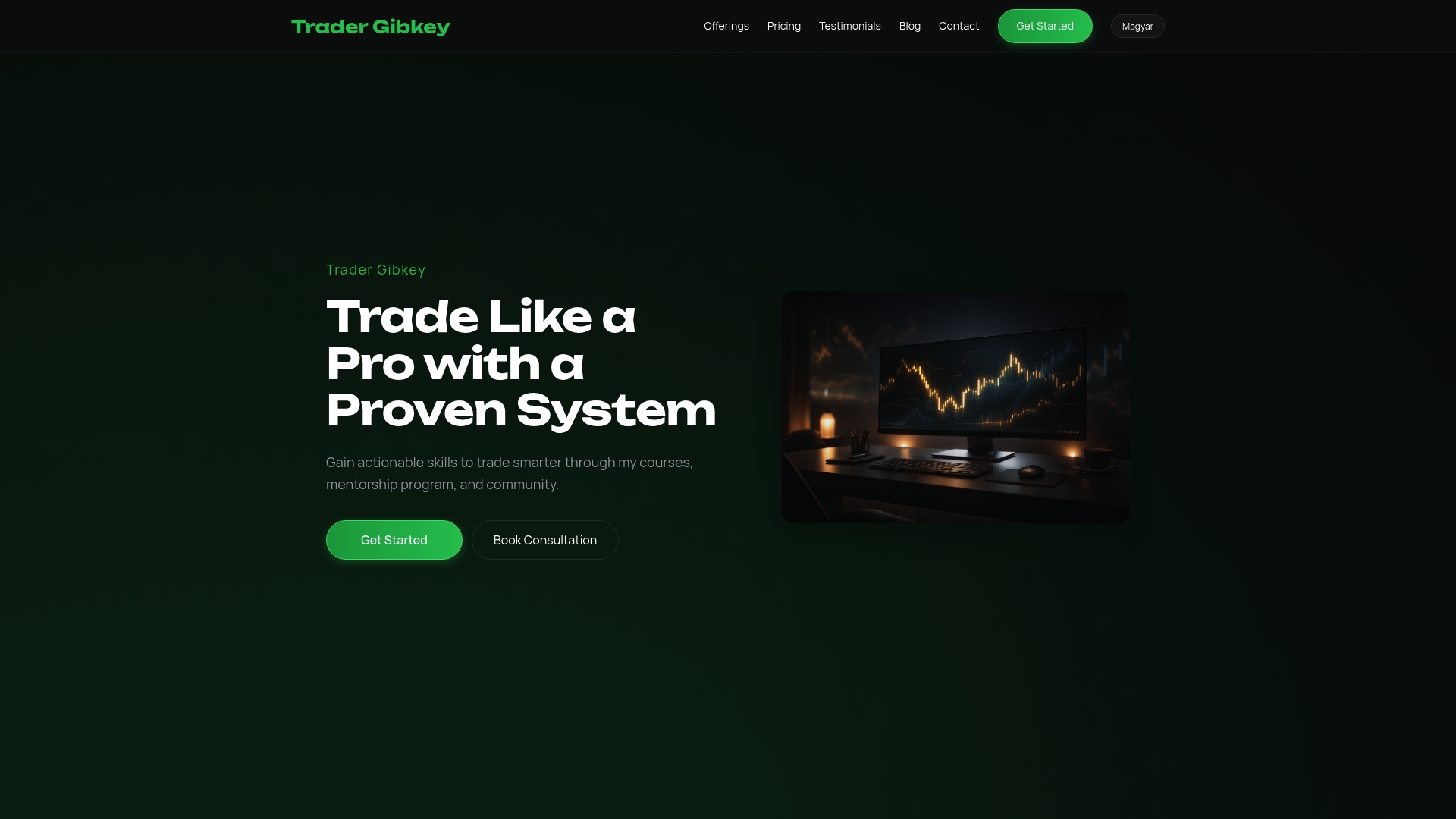
If you want a diagnostic on what’s actually going wrong in your trading, the Single Session Mentorship at 149 € gives you direct, live feedback in one sitting. Adopting a full price-action system fits better with the 3-Session Mentorship at 399 € or the 5-Session Mentorship at 559 €, both structured around repetition and refinement rather than a single fix.
For ongoing structure, subscription plans and lifetime access packages are available for traders seeking different levels of engagement. Traders who just want daily market flow can join the Weekly Telegram at 49 € per week or the Monthly Telegram at 109 € per month.
Start with a single session or visit the Trader Gibkey landing page to compare packages and choose what fits best before you commit.
Sources
This article is general information, not a substitute for advice from a qualified financial advisor. Consult a qualified financial professional about your own circumstances before acting on anything here.
FAQ
Does “Forex Tax Portugalia” Mean Tax Advice?
No. This article treats the phrase as a search for structured price-action mentorship, not Portuguese tax law. Portugal’s own tax rules on trading gains are covered separately in the body sections above for context.
How Much Does Trader Gibkey Mentorship Cost?
Pricing starts at 149 € for a Single Session Mentorship, with multi-session packs and subscription options listed on the Trader Gibkey site. Full package details, including Diamond Lifetime Access, are available there.
What Should I Check Before Paying for a Forex Mentor?
Ask for verifiable live-trading samples, a clear trial or refund policy, and transparency around typical timeframes to competence. Walk away from guaranteed-return promises or vague “proprietary” statistics with no supporting data.