
Reliable trading confidence comes from repeated, verifiable process wins, not from feelings. If you’re rattled after a losing streak, the fix isn’t a pep talk. Pause for 24 to 48 hours, then drop to micro-size and start logging plan-adherence on your next 10 trades. Most traders see measurable footing return within two to six weeks of disciplined practice.
TL;DR:
- Rebuilding confidence requires a minimum of 10 rule-adherent trades logged, with plan adherence above 90% before increasing position sizes.
- Focus on trading only your highest-quality setups during the rebuild phase, verifying each entry against your written plan before executing.
- Tracking metrics such as expectancy, profit factor, and maximum consecutive losses provides a clear indication of real progress, not just emotional relief.
- Regular use of a detailed trading journal and pre-session routines minimizes impulsive decisions and keeps confidence on a measurable upward trajectory.
- Structured mentorship and community accountability shorten the recovery process by emphasizing disciplined, data-driven trading over motivation or guesswork.
Table of Contents
- The Four Pillars of Trading Confidence
- How Do You Rebuild Confidence After a Losing Streak?
- What Daily Habits Keep Confidence From Slipping Again
- How Do You Know Confidence Is Actually Returning?
- Why This Approach Works in Live Forex Markets
- A Real Rebuild, Compressed Into One Session
- Rebuild Trading Confidence With Structured Guidance
- Sources
The Four Pillars of Trading Confidence
When confidence collapses, most traders assume the problem is emotional. It usually isn’t. Confidence is calibrated trust across four independent pillars, and each one fails differently, which means each one needs a different fix. Guessing which pillar broke, and applying a generic fix, is why so many traders bounce between overconfidence and paralysis without ever solving the actual problem.
Here’s how to tell them apart:
- Process: Do you have a written plan with entry, stop, and target rules? Failure sign: you can’t describe your setup criteria without referencing “gut feel.”
- Edge: Does your strategy show positive expectancy over a real sample? Failure sign: fewer than 50 trades logged, or a profit factor under 1.3.
- Execution: Are you actually taking the trades your plan specifies, at the size and price it specifies? Failure sign: slippage between planned and actual entries, or skipped trades out of fear.
- Risk/survival: Can your account absorb a normal losing streak without forcing a strategy change? Failure sign: position sizes that make five consecutive losses catastrophic instead of routine — a key concept detailed in comprehensive risk management practices.
Run this diagnostic before you touch your size or your setups. A trader with a broken execution pillar needs a checklist and smaller size. A trader with a broken edge pillar needs more data before risking real capital again. Treating one like the other wastes weeks.
How Do You Rebuild Confidence After a Losing Streak?
Confidence doesn’t return through willpower. It returns through a sequence of small, verifiable wins that rebuild trust in your own execution. Here’s the protocol, in order.
- Stop and pause. After a losing streak or a single outsized loss, step away for 24 to 48 hours. That short break interrupts the emotional charge that causes tilt without letting avoidance turn into re-entry anxiety, which tends to happen once the break stretches past a few days.
- Cut size hard. Come back at a reduced portion of your normal position size, or trade micro-contracts if your instrument allows it. This isn’t about protecting capital alone. It’s about removing enough financial stakes that you can focus purely on rebuilding mastery in live conditions instead of simulation.
- Trade A-grade setups only. For the next 10 to 20 trades, skip anything that isn’t your highest-conviction, best-documented setup. No exceptions, no “close enough.”
- Verify before every entry. Confirm setup name, entry price, stop, and target against your written plan before you click. If you can’t fill in all four, you don’t have a trade yet.
- Score every trade binary. After the trade closes, log one thing: did you follow the plan, yes or no. Not whether it won. Process adherence, not P&L, is the metric that matters here.
- Re-scale in steps. After 5 to 10 consecutive rule-following trades, increase size by 25%. Repeat. Never jump straight back to full size after one good week.
Pro Tip: Keep a visible tally of consecutive plan-followed trades, not consecutive wins. Watching that streak grow rebuilds trust faster than watching your P&L, because it’s a number you fully control.
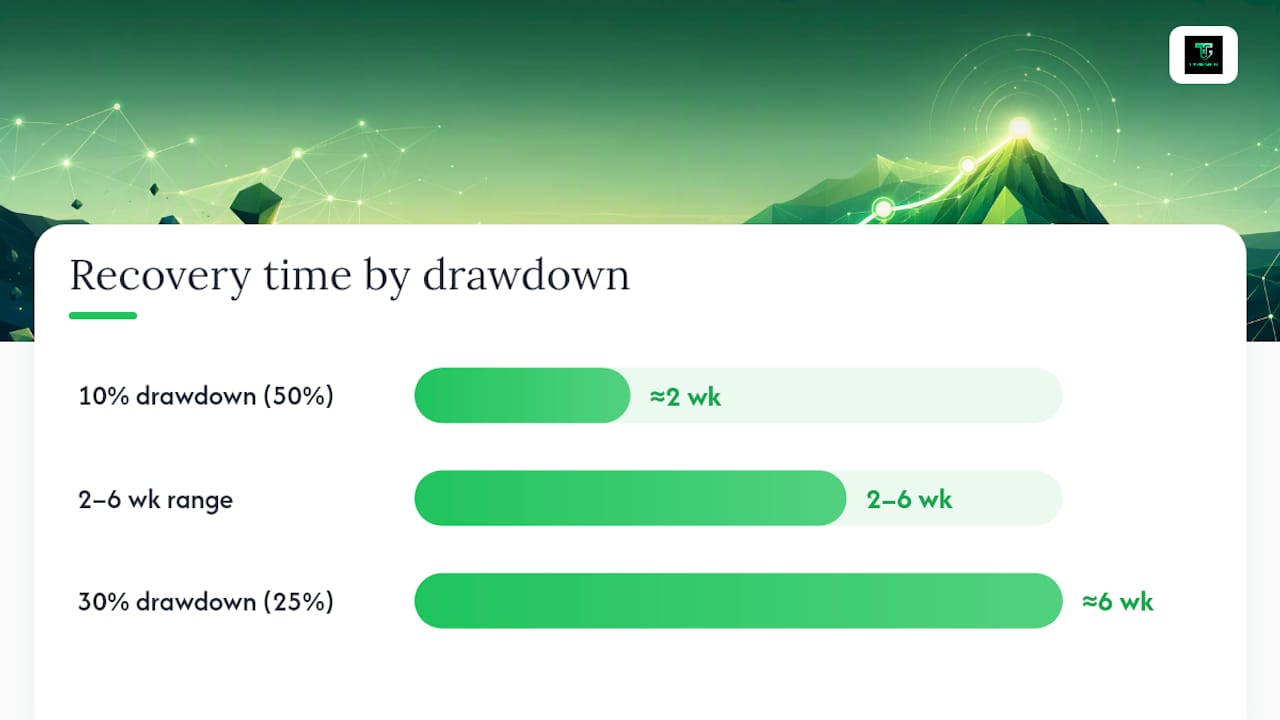
Expect this to take two to six weeks depending on how deep the drawdown was. A 10% drawdown recovers faster than a 30% one, and larger losses may call for starting at 25% size instead of 50%.
What Daily Habits Keep Confidence From Slipping Again
The rebuild protocol gets you back on your feet. Habits keep you there. A trading journal is the backbone of this, and it needs specific fields, not vague notes: setup name, plan-adherence score, emotional state before entry (1 to 10), position size relative to normal, and outcome. Each field ties back to a pillar you’re monitoring.
Before you open your platform, run a short pre-session check. Two minutes of slow breathing plus one written sentence stating your intention for the session (“only A-setups, max two trades”) does more than it sounds like it should. It forces a decision point before the market makes it for you.
Community exposure matters too, but curate it. Watching experienced traders execute cleanly builds real vicarious confidence. Watching a chat room celebrate lucky wins does the opposite.
A few lightweight tools remove friction from all of this:
- A position-size calculator, so sizing math is never a source of hesitation.
- Saved order templates for your A-grade setups.
- Micro-contracts or reduced lot sizes for the graduated re-entry phase.
| Habit | What it fixes |
|---|---|
| Trading journal with adherence scoring | Turns feelings into trackable process data |
| Pre-session breathing and intention check | Reduces impulsive, fear-driven entries |
| Curated community exposure | Builds mastery through observation, not noise |
| Position-size calculator | Removes sizing hesitation and errors |
How Do You Know Confidence Is Actually Returning?
Feeling better isn’t the signal. The numbers are. Track these metrics weekly and only make sizing decisions based on what they show, not on how the last trade felt.
| Metric | What it tells you | Practical threshold |
|---|---|---|
| Plan-adherence % | Whether you’re executing your own rules | Above 90% before considering a size increase |
| Win rate by setup | Whether specific setups still hold up | Consistency in following A-grade setups |
| Expectancy | Average $ result per trade over your sample | Positive over 50+ trades |
| Profit factor | Gross wins divided by gross losses | Above 1.3 |
| Max consecutive losses | Whether your risk sizing survives normal variance | Should not threaten account survival |
Fifty trades is the practical floor for trusting expectancy numbers. Below that, a hot or cold stretch is just noise, and you risk mistaking variance for a broken edge or an accidental hot streak for skill. Between trades 10 and 50, use plan-adherence as your interim checkpoint since it doesn’t need a large sample to mean something.
Why This Approach Works in Live Forex Markets
This protocol isn’t theoretical. It’s built on the same principle that governs risk management across every serious trading education: what you can measure, you can fix, and what you can’t measure, you can only guess at. Trader Gibkey’s approach draws on 18+ years of live market experience [(add specific credentials and track record details)], which is exactly why the courses lean so heavily on structured journaling, graded setups, and live trading sessions rather than motivational content.
The mentorship and community access built into the Confluence Trading framework exist to put plan-adherence scoring and graduated re-entry into practice with peer accountability, not just theory on a page.
A Real Rebuild, Compressed Into One Session
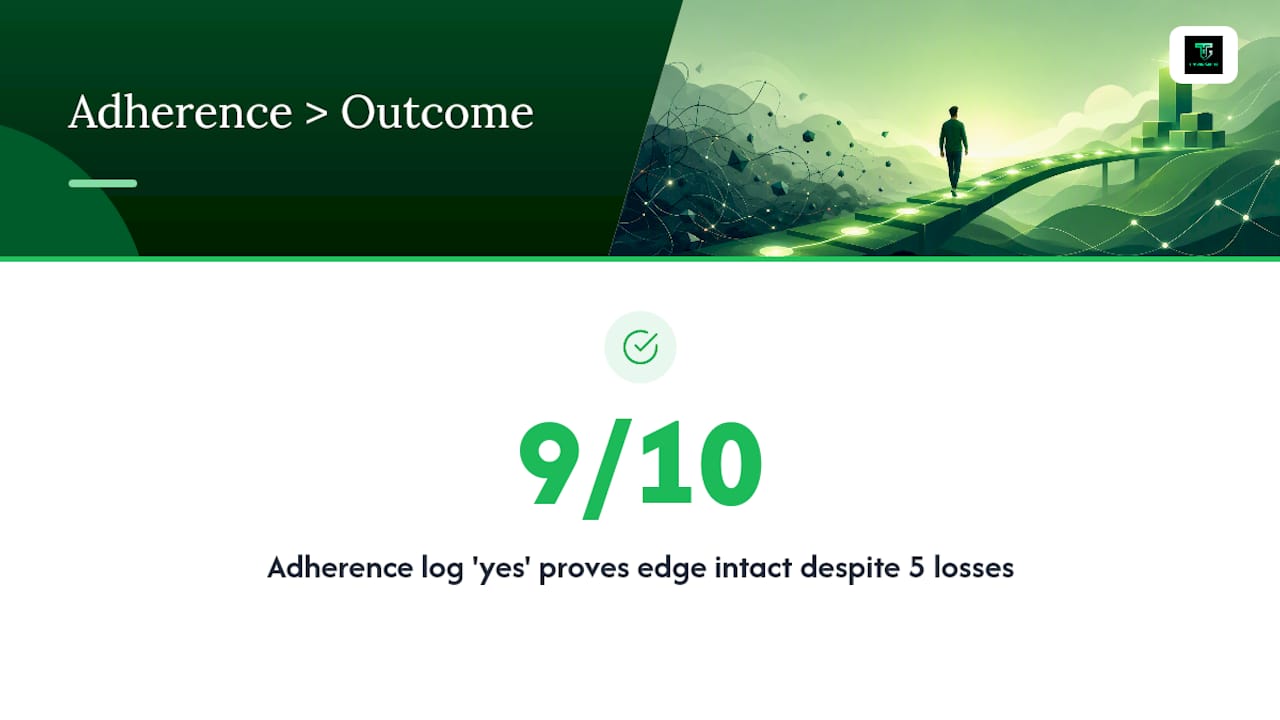
A trader in Trader Gibkey’s community lost five trades in a row chasing a breakout setup that wasn’t in his plan. Nine of ten scored a “yes.” That number, not his account balance, told him the edge was intact. He rescaled the following week.
The takeaway: your next session doesn’t need a win. It needs a “yes” on the adherence log.
— Gabriel
Rebuild Trading Confidence With Structured Guidance
Trader Gibkey is a faster path back to consistent execution than rebuilding alone through trial and error. The structured courses, personalized mentorship, live trading sessions, and journaling templates map directly onto the rebuild protocol: graded setups replace guesswork, live sessions replace simulation-only practice, and a documented community replaces isolated tilt-driven decisions.

If you’re currently cutting size and logging plan-adherence on your own, a structured program shortens the distance between “reduced size” and “trusted edge” by putting real feedback and price action strategy behind every trade you review. Explore Trader Gibkey’s mentorship and courses to start rebuilding with a system already built around evidence, not motivation.
Sources
External: rebuilding confidence after a losing streak, trading after a big loss without tilting. Internal: what is a trading journal, trading psychology mistakes.
This article is general information, not a substitute for advice from a qualified financial advisor. Consult a qualified financial professional about your own circumstances before acting on anything here.
- How to Rebuild Trading Confidence After a Losing Streak | DayTradingToolkit
- How to Trade After a Big Loss Without Tilting (2026) | TradersSecondBrain
- Trading Confidence: How to Trust Your Setups With Real Data | TradersSecondBrain
- How To Recover From Trading Losses & Rebuild Confidence | The Reborn Trader
- Trading Confidence: Calibrated trust in your edge, your execution, and your survival - NexusFi Academy